Student Assessment Tool Strikes “GOLD” for Preschool Teachers
June 4, 2025
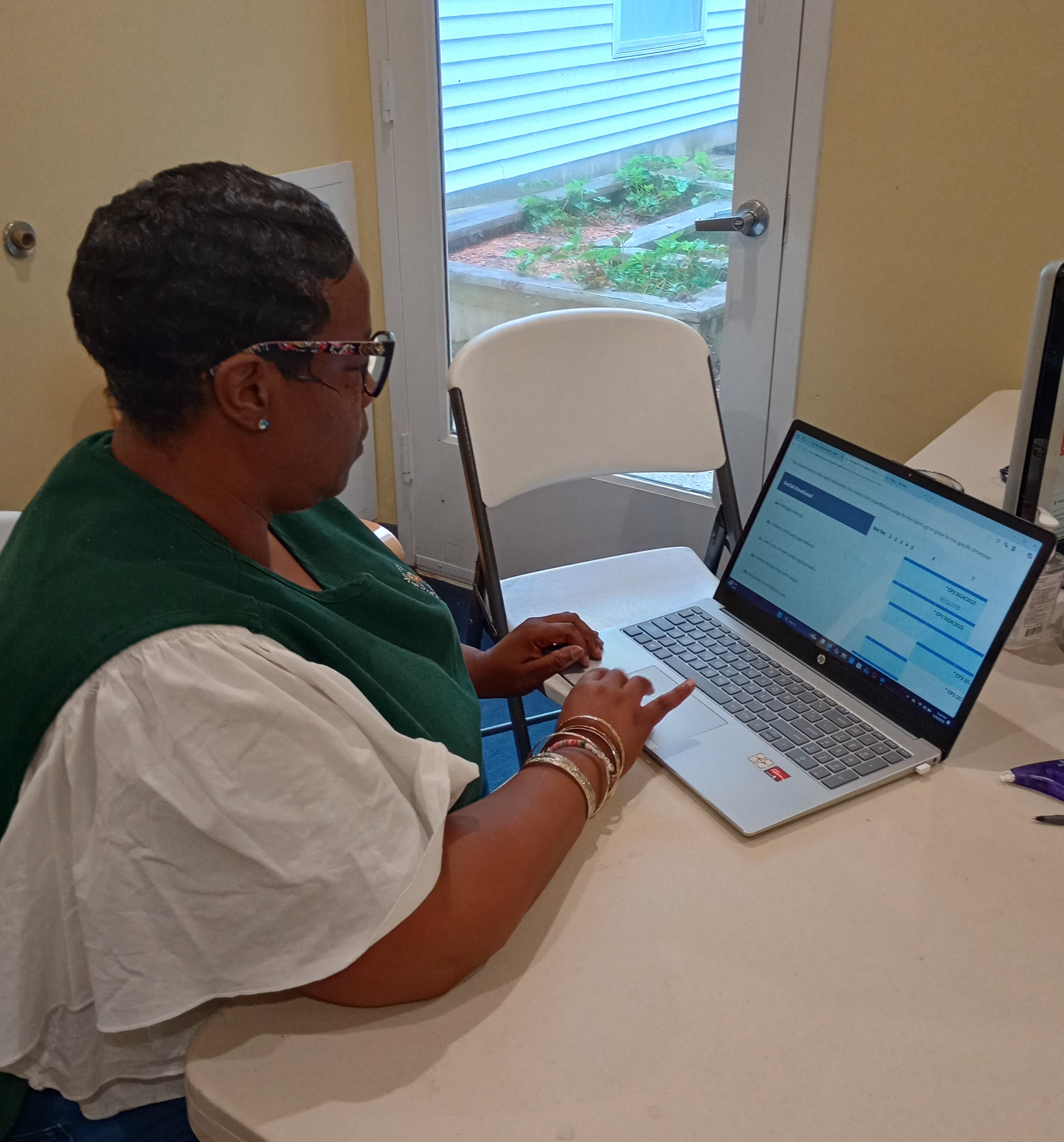
It takes much more for a child to be fully prepared to enter kindergarten than simply knowing their ABCs and how to tie their shoes. What knowledge and skills must children possess to ensure that they begin their K-12 journey on the right foot? And how can families know their children are ready?
A successful preschool experience is critical in equipping children with solid skill sets needed for a smooth transition to kindergarten. This can only happen when preschool teachers have the necessary tools and training to identify specific strengths and challenges for every student.
Tina Mangum has taught preschool for 25 years. For the last decade or so, she has been able to pinpoint and address specific areas of need in individual students by employing the Teaching Strategies GOLD® (TSG) program.
“When I sit down with my parents at the beginning of the school year, I let them know this is how I navigate their child’s development,” said Mangum, who currently teaches for Durham PreK at Primary Colors Early Learning Center-Dixon in Durham.“ (TSG) gives a holistic approach that allows you to reach all kids right where they are and give them different activities that they may not have been introduced to before. It’s a very ‘kid-friendly’ program.”
Through TSG, preschool teachers are able to perform meaningful and informative assessments of their students’ abilities and skill levels. With this information, teachers can then design lesson plans and activities that not only address how groups of students learn, but also help teachers identify specific areas of need with each individual student.
How TSG works
Teachers in North Carolina’s publicly funded preschool classrooms are required to be trained and certified to use the TSG program, which focuses on 36 “Objectives for Development and Learning” within nine developmental domains, or areas of skill. The domains are Social-emotional, Physical, Language, Cognitive, Literacy, Math, Science and Technology, Social Studies, and English Language Acquisition.
Each of these nine areas have specific objectives students must achieve in order to master a skill. For example, objectives in the social-emotional domain include “Regulates own emotions and behaviors,” "Establishes and sustains positive relationships,” and “Participates cooperatively and constructively.” Specific objectives in the Mathematics domain include, “Uses number concepts and operations,” “Explores and describes spatial relationships,” “Compares and measures,” and “Demonstrates knowledge of patterns.”
Teachers are given creative oversight in planning fun and engaging learning activities for accomplishing these objectives. TSG offers a curriculum that teachers can use, but they have great flexibility in designing activities specific to their students.
“It’s up to the teacher to pick and choose among these experiences what activities they want to use,” said Maggie Connolly, Durham PreK Instructional Support Quality Enhancement Manager for Early Years. “They can also customize their own experiences.”
Connolly added that one learning experience might address multiple objectives. For example, a student learning to ride a bike might be demonstrating gross-motor and balancing skills in the Physical objective. But they’re also connecting with the adults who are teaching them, so that might meet a social-emotional objective. If someone gets in their way, they move around them, so this could possibly fulfill a cognitive objective.
Preschool teachers assess every student regularly and often to determine progress being made toward reaching those objectives, where challenges might exist, and how they might address those challenges through refining lesson plans and learning activities.
“Teachers are required to document children's progress every week,” said Connolly. “There must be at least one documentation per week per child, but many teachers far exceed that.”
Documentation of a child’s progress must include anecdotal notes from the teacher but can also be supported by photos and video clips, said Connolly, whose team provides support and guidance for preschool teachers performing these assessments and crafting lesson plans accordingly. Aggregate data of all Durham PreK children, classrooms, and sites offers broad insight around providing appropriate professional development and technical assistance support for teachers.
“We have coaches going out to work with teachers around interactions, communications, and everything else,” said Connolly.
Durham PreK Results Indicate Success in 2023-24
With all the data collected, teachers then rate the child’s ability on a developmental continuum, which is based on a color band. Green means objectives are being achieved for 3-to-4 year olds; blue indicates they are being achieved for 4-to-5-year-olds. For 5-to-6-year-olds it is purple.
“We hope that by the winter quarter of the school year (4-to-5-year-olds) are moving into the blue band, and we want them to at least be in the blue band if not the purple band, as some students are able to meet,” said Connolly.
For the 2023-24 school year approximately 450 children in Durham PreK programs were assessed in each of six domains, and the results showed a great deal of success. A large majority of children assessed throughout were meeting or above expectations widely held for preschool age children, in each domain assessed:
- Social-emotional development - 92 percent of children meeting or above expectations (up from 45 percent meeting expectations and none above expectations at the beginning of the school year);
- Physical development - 93 percent meeting or above (up from 63 percent meeting expectations and none above)
- Language development - 87 percent meeting or above (up from 46 percent meeting expectations and none above)
- Cognitive development - 88 percent meeting or above (up from 43 percent meeting expectations and none above)
- Literacy development - 92 percent meeting or above (up from 54 percent meeting expectations and none above)
- Mathematics development - 86 percent meeting or above (up from 35 percent meeting expectations and none above)
Parent Engagement
Quarterly checkpoints include reports on the child’s progress and parent-teacher conferences to discuss how their child is doing, and what teachers and parents can do together to ensure improvement and continued success.
“PreK is on the frontlines of being able to identify for a family whether a child might have a delay. So it’s critical that we look at the data to support what we’re saying to families,” said Connolly.
“In a conference with the family you’d also be talking about highlighting all the great things,” Connolly added. “(Teachers) can show videos, photos, and work samples. It’s a wonderful thing.”
Sometimes a child might be identified as needing special services, such as occupational therapy, physical therapy, or speech therapy. Teachers work with parents or guardians to make the decision for screenings and extra support from early childhood services.
Families also are invited to sign up for Engage, a free app through which teachers and families can communicate directly. Teachers can update parents or guardians on their child’s progress. Teachers also routinely offer ideas for activities that families can use to reinforce at home what their children are doing in the classroom.
Connolly wants Durham families to know that preschool teachers are well trained and supported in providing great learning experiences that will prepare their children for what comes next.
“We want families to know their children are in a safe and exciting and nurturing environment. This is a fun place for the kids to be, with so many engaging learning experiences,” said Connolly. “The whole goal is to get them ready to be successful in kindergarten. We want them to be able to communicate their needs, problem solve, and have a curiosity to learn, because they feel secure.”