Kids ‘R’ Kids Site Visit
March 18, 2026
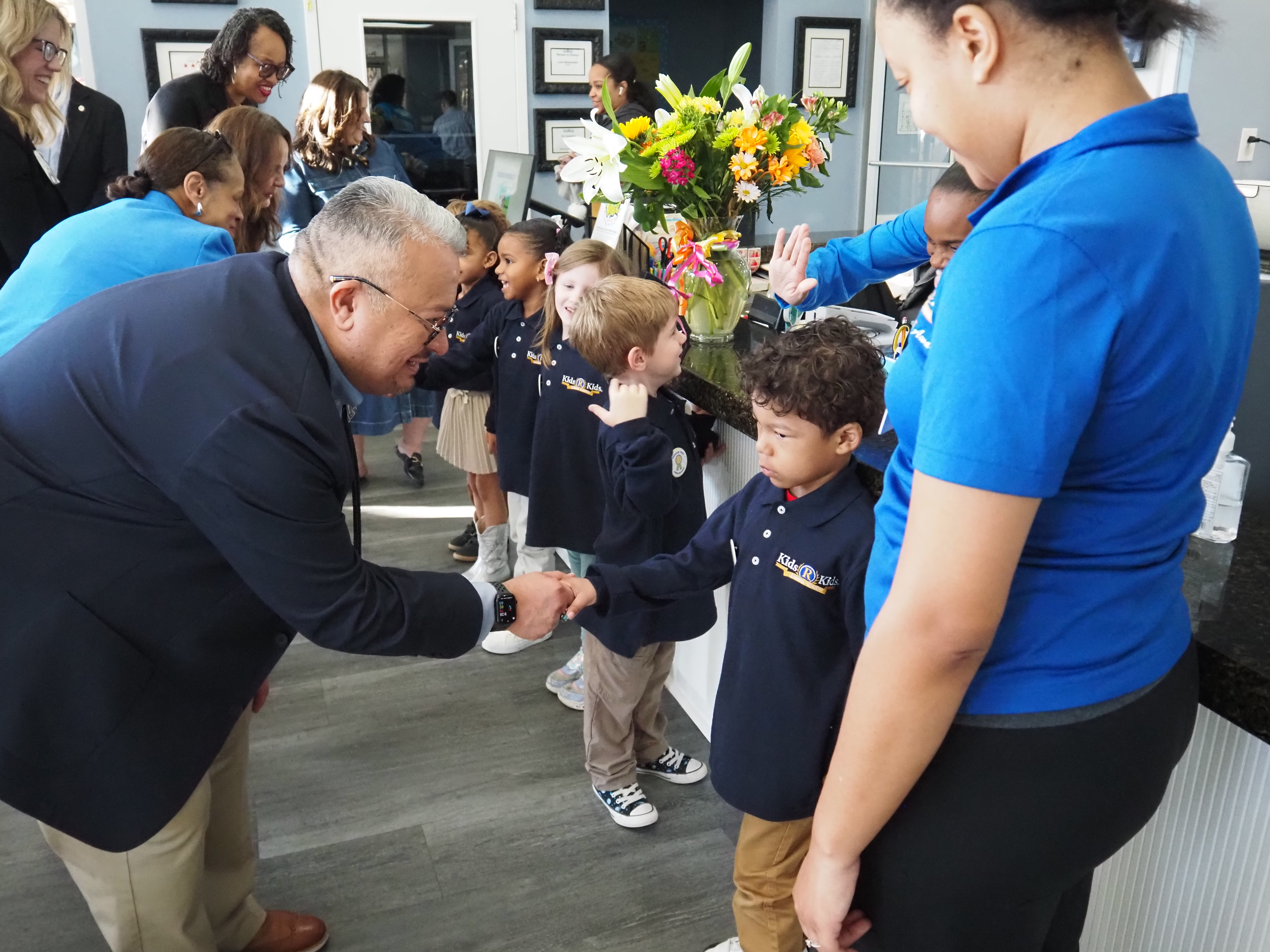
On the morning of March 9, 2026, legislators participating in Cohort 8 of the Early Childhood Policy Academy (ECPA) took part in a site visit at Kids ‘R’ Kids RTP. The visit was designed to give policymakers a firsthand look at how local communities can expand access to high-quality early childhood education through coordinated funding and policy partnerships.
The Early Childhood Policy Academy is a collaboration between The Hunt Institute and the Saul Zaentz Charitable Foundation. The eighth cohort convened from March 8 to March 10, 2026, in partnership with the Center for Child Care and Family Policy at Duke University’s Sanford School of Public Policy. Nineteen legislators from 13 states participated in the academy, representing a bipartisan group committed to strengthening early childhood systems in their respective states. Prior to the in-person convening, cohort members completed four online learning modules designed to build foundational knowledge on key early childhood policy topics.
The March 9th site visit, held from 9:00 to 11:00 a.m., highlighted Durham PreK and how the program expands access to high-quality preschool through a mixed-delivery model that blends local, state, and federal funding streams. Hosting the visit at Kids ‘R’ Kids RTP allowed legislators to see how Durham PreK operates within a community-based child care setting that serves local families.
Durham PreK is a county-funded initiative that works alongside established programs such as NC Pre-K and Head Start. By combining Durham County investments with state and federal resources, the program increases the number of available early learning seats for four-year-olds while maintaining high standards for program quality. This approach allows Durham to serve more children in a variety of settings, including private child care centers like Kids ‘R’ Kids, public schools, and other community-based providers.
During the visit, legislators learned how Durham’s coordinated funding model supports both access and quality. By layering county funding with NC Pre-K and Head Start resources, the community has created a stronger and more flexible early childhood system that can respond to local needs while maintaining consistent quality expectations across providers.