Connecting Professional Development Plans to Quality Literacy Instruction
October 15, 2026
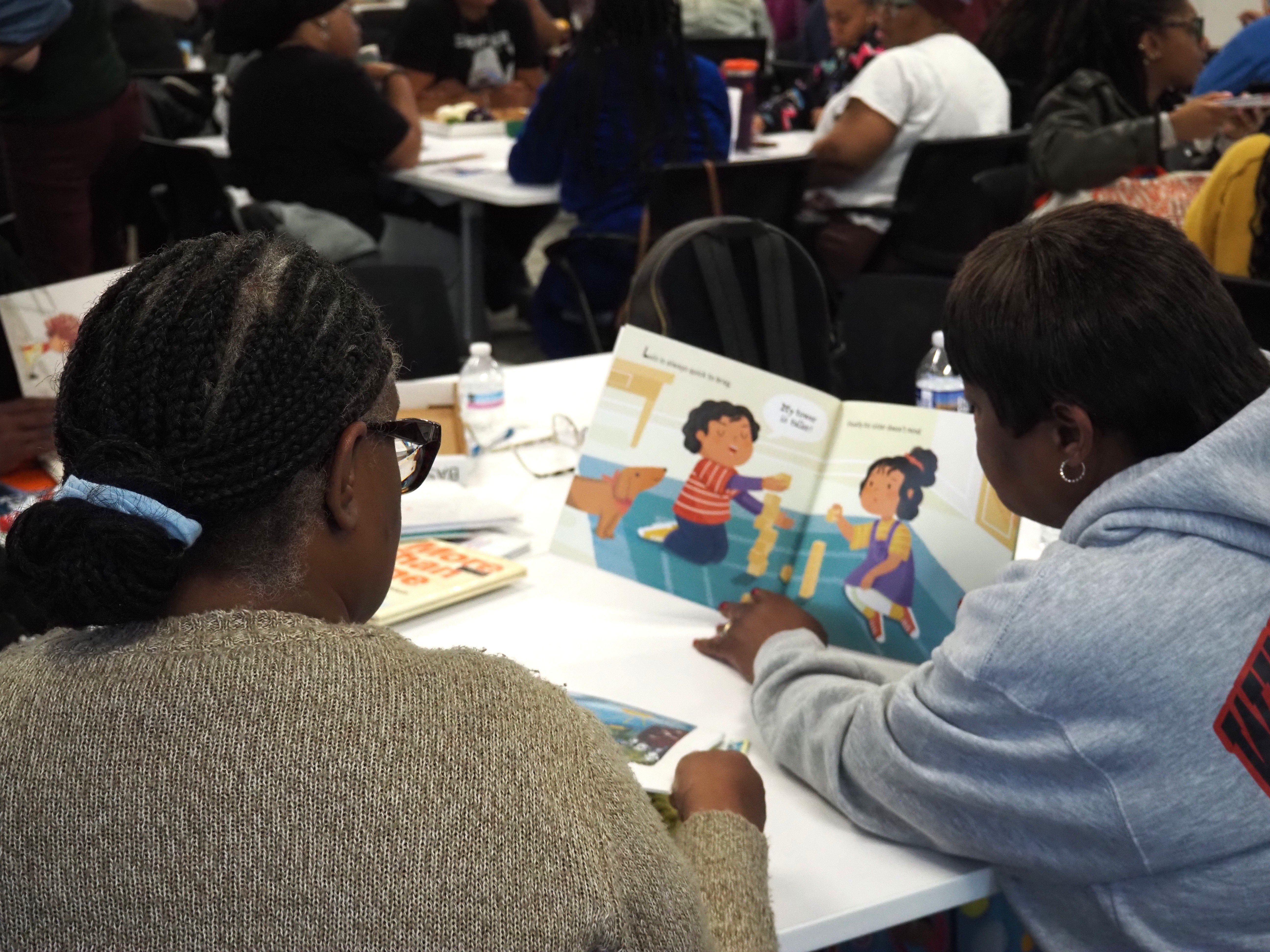
At the beginning of each year, Durham PreK teachers create individual professional development plans using S.M.A.R.T. goals, goals that are Specific, Measurable, Achievable, Relevant, and Time-bound. These plans provide a foundation for purposeful professional growth. This year, our literacy-focused learning opportunities will help teachers connect their goals to intentional classroom practices that support children’s language and early literacy development.
Incorporating literacy into a professional development plan means moving beyond a goal of simply attending training. A teacher can identify a specific practice to strengthen, decide how to document its use, and establish a timeline for reviewing progress with their Quality Enhancement (QE) Coach. Focus areas may include high-quality language interactions, individual and small-group instruction, intentional book reading, phonological and phonemic awareness, or letter knowledge and letter-sound correspondence. Teachers can also consider how to adapt these practices to children’s individual strengths, interests, and needs.
For example, a teacher might set the following S.M.A.R.T. goal: “Over the next 30 days, I will plan and implement two intentional read-alouds each week that incorporate selected early literacy skills. I will document children’s responses and review my reflections with my QE Coach to identify effective practices and next steps.”
Connecting Goals to Learning and Practice
Two literacy-focused Professional Learning Communities (PLCs), along with our Instructional Assistant Seminars, will support teaching teams in developing the practices connected to their professional development goals. These opportunities link professional learning to classroom application and ongoing reflection.
A recent PLC reflection activity illustrates this approach. Teachers were asked to practice six early literacy skills while reading a book with children:
Print Motivation: Plan a picture walk and ask children to predict what the book is about.
Print Awareness: Point out the cover, title, author, and where the words begin.
Letter Knowledge: Choose one letter on the cover to highlight.
Vocabulary: Select and explain one new vocabulary word from the text.
Phonological Awareness: Choose one letter sound to explore through playful sound activities
Narrative Skills: Pause at a selected page and ask children to predict what will happen next.
Teachers then shared a reflection with their QE Coach about how the experience went in their classroom. This process connects professional development to evidence of practice: what teachers tried, how children responded, and what adjustments they could make.
Supporting Quality Through Reflection
The quality of professional development is reflected in how learning is applied. Reviewing classroom examples and reflections with a QE Coach gives teachers an opportunity to assess progress toward their S.M.A.R.T. goals and identify further support. Instructional Assistant Seminars extend this learning to other members of the teaching team, supporting purposeful literacy interactions throughout the classroom day.
Extending Learning at the A.S.K. Conference
Our literacy-focused professional development will continue at the A.S.K. Conference on February 27, 2027, featuring “Science of Reading Essentials: A Practical Guide to Evidence-Based Reading Instruction in the Pre-K Classroom.”
The conference will build on the learning taking place through PLCs, Instructional Assistant Seminars, and QE coaching. Teachers can connect this learning to their professional development goals, identify strategies to apply, and reflect on their implementation. By linking individual goals with professional learning and classroom practice, Durham PreK is supporting continuous improvement in the quality of early literacy instruction.