Check back soon for more information!
A welcome from Dr. Linda Chappel, Sr. Vice President at CCSA for Triangle Area Child Care Resource and Referral and the project lead for Durham PreK
Welcome back to school! We are excited to be working together in-person to serve our four-year-olds in supportive group learning environments, while following safety guidelines in the ChildCareStrongNC Public Health Toolkit. I salute the care, enthusiasm and dedication we see every day from our teachers, administrators, and support staff. The past 18 months have been a trial for our community and we are committed to supporting our youngest learners, especially in their social emotional development.
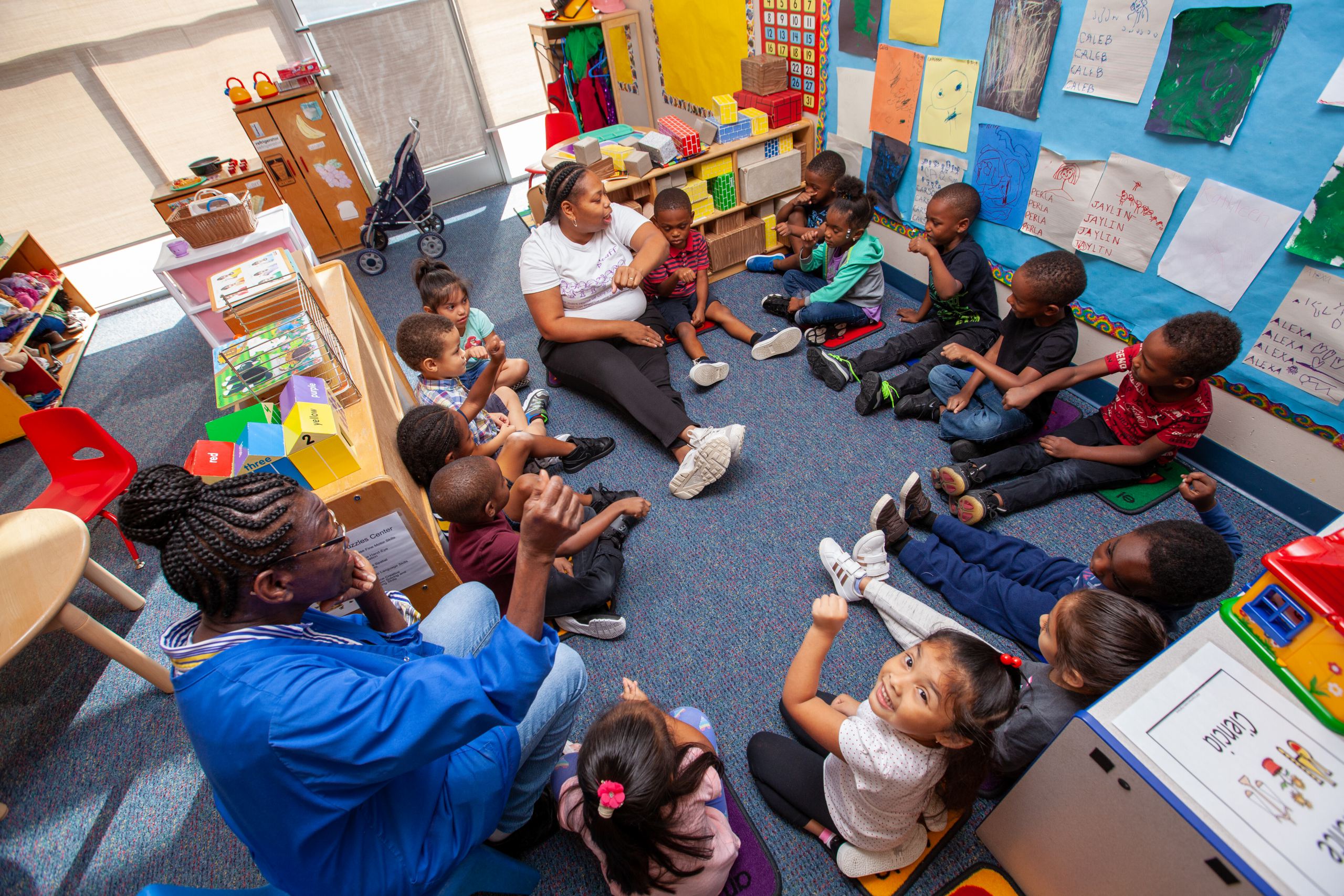
I have been privileged to work in support of children for many years and I know firsthand many of the challenges faced inside the classroom and out. Now, with the resurgence of COVID-19, our teaching teams are on the frontlines of this pandemic yet again. We are committed to assuring safety and are working to provide children with connections with caring adults and opportunities for friend building during in-person play—the best way for learning.
We are pleased to announce that Durham PreK’s Governance Committee voted to waive parent fees for the 2021 – 2022 school term in support of families during the pandemic. So many families face economic challenges and other difficulties during these trying times, the fees have been waived no matter your circumstances.
Durham’s community investment in our educators and in public preschool services is a long term investment in our students. For the new school year, the Durham County Commissioners voted to increase direct funding for Durham PreK by 6% to expand seats and further invest in teacher salaries and professional development. Durham PreK is one of the few public preschool programs in the nation that requires pay equity for teachers across all types of classrooms—whether they be in privately contracted licensed programs, Head Start or in public schools. In public preschool we cannot have sustainable high quality services until we prioritize pay equity across the system—public private partnerships are key to providing access universally but disparities in pay in preschool settings perpetuate inequities. For this reason Durham has prioritized compensation of the workforce.
Durham County supports early education broadly, investing nearly $15 million in the past four years to build Durham PreK as a program with universal access. The program’s theory of change centers on the teacher. High quality developmentally appropriate interactions have a direct impact on the socio-emotional, language and brain development of young children. Key components of Durham PreK include elevating workforce pay and professional development for early educators, intensive technical assistance and coaching designed to raise instructional quality and work with local educational institutions to increase and improve the supply of early education teachers.
Please join me in extending appreciation to our preschool teachers and teacher assistants as well as all of our early education support teams across Durham. We look forward to a great school year!
The new school year has begun, and we want to welcome you to the start of your pre-K experience in Durham. We are so excited to have you become part of our program, and we know your teachers are excited to get to know you and your family!
School Year Resources
Here are a few resources that may be helpful throughout the school year.
Questions?
You can find some FAQs below, or you can check out our full FAQ
What will my child learn in pre-K?
Check out our "Why Pre-K?" page to learn about how pre-K is beneficial for children, families, and the community, and what to expect your child to learn.
In Durham PreK classes, we support play-based learning, social emotional development, relationship building, and practicing foundational academic skills.
How can I contact my child's site?
You should be contacted by your child's pre-K site before the school year begins, and you may also be sent or given a welcome packet from your site. If not, you can find contact information on the "Site Locations" page.
If you have tried contacting your site and cannot get in touch with them, you can reach us at durhamprek@childcareservices.org and we can help connect you.
Why did Durham County invest in Durham PreK?
Durham County believes in high-quality early childhood experiences for all 4-year-olds, and investing in Durham PreK expands access and enhances the quality of local pre-K seats. You can learn more about Durham's invest here.
Opportunities for Parents and Families
One aspect of high-quality early education Durham PreK values is family engagement. When parents and families are involved in their child's school environment, students are more likely to succeed academically, socially, and emotionally (Office of Early Childhood Development). This will also help build relationships between your family and your child's teacher, teacher assistant, and director.
Joyce Epstein's Framework of Six Types of Involvement outlines the different ways in which schools and families can work together in children's learning. The six types include:
- Parenting - Families and school staff work together to support positive learning environments at home.
- Communicating - Families and school staff work together on effective forms of communication
- Volunteering - Families and school staff work together to identify volunteer opportunities in the school.
- Learning at Home - Families and school staff work together to incorporate school lessons into home learning, as well.
- Decision-making - Families are encouraged to participate in school decisions, attend leadership development opportunities, and serve as family representatives.
- Collaborating with Community - Families and school staff work together to identify resources in the community that would be helpful for families at the school.
More on Family Engagement
Click each section for more information and examples of how they can be incorporated into your child's pre-K site!
If there's something related to your child's learning environment, learning interests, stage of development, or anything else regarding home practices, you can talk to your child's teacher or center director about potential resources to use. Parent's and families are children's first teachers, but your pre-K teachers are also full of knowledge and are happy to share.
Example: If your family is looking for inexpensive ways to increase your home library for your child, your teacher may be able to help you find local options for free or low cost books!
Communication is one of the most important parts of your child's school experience. Healthy and frequent communication with your child's teacher helps build strong relationships, allows teachers to share progress and concerns, and helps teachers learn more about your family's traditions and child's interests to incorporate into their classroom.
Welcoming and initiating healthy communication practices when school starts can set both teachers and families up for a year of strong collaboration.
Volunteering with your child's school has many benefits for children, your family, and the school itself. Children gain more skills in communicating with adults and learn about the different occupations or skills each volunteer has. Family members see their child learning in their classroom environment and can revisit lessons at home. Teachers are able to further connections with family volunteers, learn more about their culture, traditions, or skills, and even spend more time with students.
Volunteering is often seen only as assisting in the classroom during school hours, but that is not an option for families that work during the school day. Families and school staff in Durham PreK are encouraged to work together to find a variety of options for families interested in volunteering.
Examples: Some families may want to lead a read aloud in the classroom. If a family wants to participate but has to work, ask them to send in a video to play for the class! Other options for volunteering during after work hours could include helping teachers with office work, preparation for the next day's crafts, or set-up and clean-up duty for evening events at the school.
Children learn in the classroom with their teachers and classmates, but children also learn so much at home! Talking with your child's teacher about how to support their classroom learning at home can help families find new and creative ways to learn at home!
Learning at home does not mean families are creating lesson plans or following a curriculum. It means asking questions about your child's learning based on their lessons at school, encouraging their curiosity, or talking to them about concepts related to their school learning while doing household activities.
Example: If your child's teacher tells you that your child loves the water and sand sensory table which helps teach the beginning skills in volume and measurement, you may decide to ask your child to help prepare dinner or assist in a baking project while talking about volume and measurement.
Check out our Learning at Home page or visit our Instagram TV channel for learning videos!
This is often seen through PTA/PTO organizations in schools which give families the opportunity to advocate for their children, raise money and plan events for their school, and more. These are great ways for families to become involved in and develop a sense of agency of their child's education.
Other examples: Family advocacy team that focuses on local, state, or federal topics in education. This may include awareness campaigns, visiting local and state representatives, or phone banking. Schools might also consider a family advisory board. The board may develop their own proposals for things they'd like to see in their child's school, or the director may ask the board to think through a project they want to see happen in the school.
In Durham, there are many resources for families focusing on health, cultural appreciation, anti-racist education, social and emotional development, and more. Families and school staff can work together to connect with resources that fit the needs of the school's families. This is an excellent way to create a fun family activity after school!
Examples: Families may be interested in fire safety lessons and ask the fire department to come by and show the students how to protect themselves from fire and how to prevent fires from starting. Other ideas may include partnering with Book Harvest or an agency focused on providing access to technology if many families in the center are looking for accessible or affordable home resources.
Thank you for choosing Durham PreK for your child's pre-K experience! Please let us know if you have any stories to share (we may feature you in a blog post or a newsletter!), concerns you may have, or if you're in need of a resource we can connect with for you.
Do you or your organization want to learn how to assist families with the 2021-2022 Durham PreK application?
Please join us via Zoom, Thursday, February 18th from 10am -12pm to learn how to access the online application, gain a deeper understanding about each program’s requirements, and help spread the word about enrollment! If you are unable to attend, please still register for the event. We will send a recording of the training to all registrants and attendees after the session.
We will share information about how to navigate Durham’s educational options for your school-aged child, including the Durham Public School magnet school & Career and Technical Education lottery, charter schools, and universal pre-kindergarten program. The last 30 minutes of the workshop will be reserved for Q&A.
Compartiremos información sobre cómo explorar las las opciones escolares de Durham para su hijo incluyendo la lotería para especializadas (magnet) y las escuelas técnicas y profesionales (CTE) de DPS, las chárter y el programa universal de pre-kinder. Los últimos 30 minutos del taller serán para preguntas y repuestas. Para más información en español comuníquese con: Angie Schiavone a amschiavone@dconc.gov.
We will share information about how to navigate Durham’s educational options for your school-aged child, including the Durham Public School magnet school & Career and Technical Education lottery, charter schools, and universal pre-kindergarten program. The last 30 minutes of the workshop will be reserved for Q&A.
Compartiremos información sobre cómo explorar las las opciones escolares de Durham para su hijo incluyendo la lotería para especializadas (magnet) y las escuelas técnicas y profesionales (CTE) de DPS, las chárter y el programa universal de pre-kinder. Los últimos 30 minutos del taller serán para preguntas y repuestas. Para más información en español comuníquese con: Angie Schiavone a amschiavone@dconc.gov.
The A.S.K. (Advancing Skills & Knowledge) Conference is going virtual in 2021 with a week of online learning for early care and school-age education professionals! From Saturday, February 20 through Thursday, February 25, choose what sessions you’d like to attend, but registration will cover the conference in full.
Early bird registration is $27.00 per attendee and ends January 5, 2021. After that, registration will cost $35.00 per attendee and closes on February 1, 2021. View the agenda and features of the 2021 ASK Conference below or read all of the conference workshop descriptions here.
“This conference keeps getting better. I’ve been attending for 15+ years, since it was ‘Day for Day Care’ on the UNC campus.”
— 2019 ASK Conference Attendee
ASK Conference Agenda
Saturday, February 20, 2021
Session I: 8:30 a.m. – 10:00 a.m.
Session II: 10:30 a.m. – 12:00 p.m.
Keynote Session: 12:30 p.m. – 1:30 p.m.
Monday, February 22, 2021
Lunch & Learn: 1:00 p.m. – 2:00 p.m.
Evening Sessions: 7:00 p.m. – 8:30 p.m.
Tuesday, February 23, 2021
Lunch & Learn: 1:00 p.m. – 2:00 p.m.
Evening Sessions: 7:00 p.m. – 8:30 p.m.
Wednesday, February 24, 2021
Lunch & Learn: 1:00 p.m. – 2:00 p.m.
Evening Sessions: 7:00 p.m. – 8:30 p.m.
Thursday, February 25, 2021
Evening Sessions: 7:00 p.m. – 8:30 p.m.
Click here for the full list of sessions.
**Registration covers the whole conference from Saturday, February 20, 2021, to Thursday, February 25, 2021.**
Early Bird registration (ending January 5, 2021): $27.00
Regular registration (ending February 1, 2021): $35.00